Keynotes

Collaborative In-Network Intelligence: Mechanisms for a Data Plane that Sees, Thinks, and Cooperates
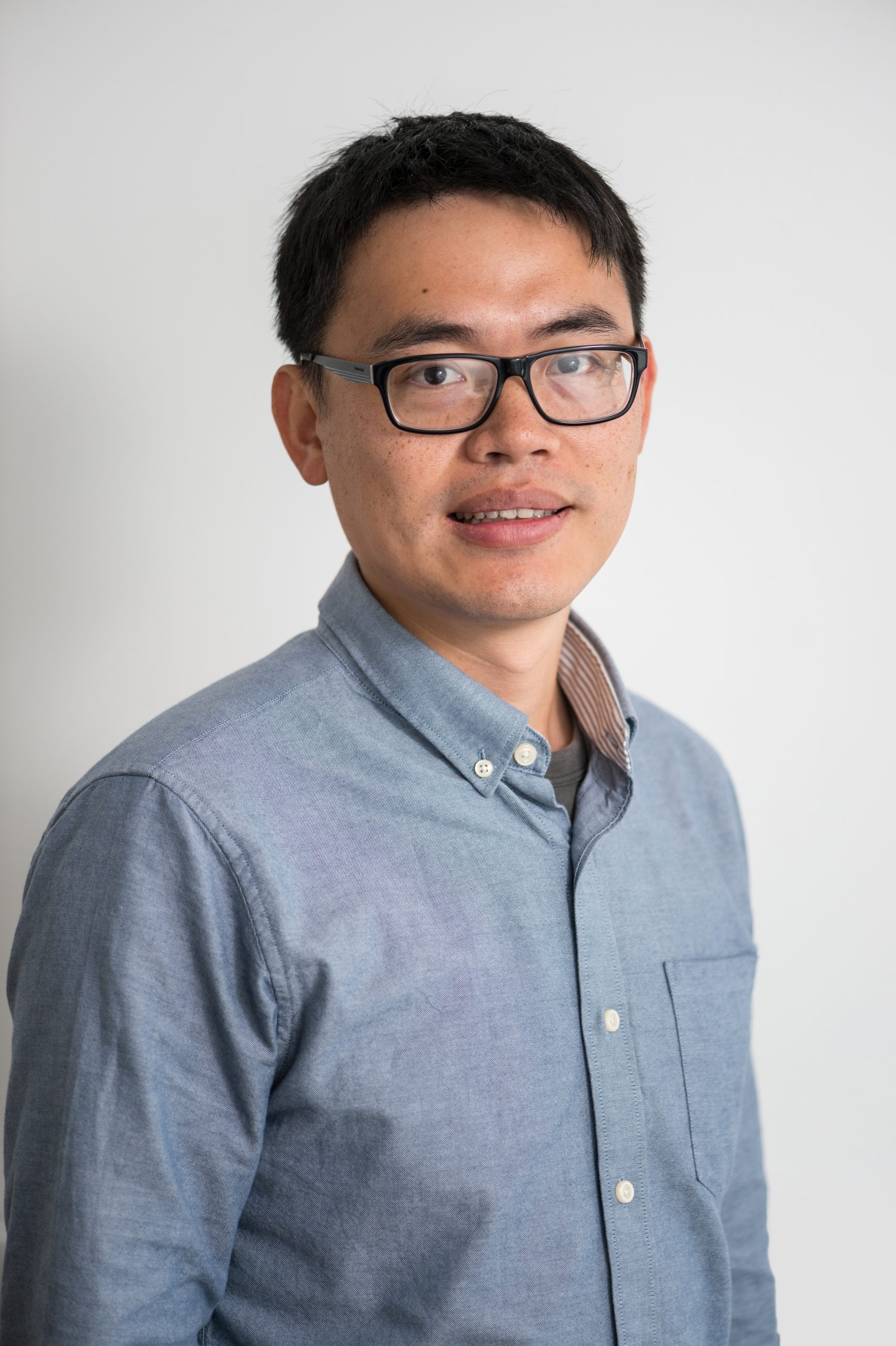
Posco (Fung Po) Tso is a Professor of Computer Networks and Systems at Loughborough University, where his research focuses on making computer networks smarter — enabling them not just to carry data, but to process and act on it in real time. A central theme of his work is bringing AI and computing to the very edge of the network, close to where data is generated. His research has made the leap from lab to market: his ServerlessEdge runtime has been integrated into a commercial 5G edge router, the result of three successive jointly-funded projects spanning over five years. His 5G and Internet-of-Things research also underpins a live sensing deployment in the town of Bordon that continuously streams environmental data for ongoing research. He leads the IoDT^2 project, a €2.68M European consortium exploring the Internet of Digital Twin Things, and has secured over £5M in competitive research funding from UK and European sources including EPSRC, Innovate UK, and the UK Government’s SBRI programme. His international research collaborations span institutions in the UK, China, and beyond, with results published at leading computing venues. 
 
Posco is a Senior Member of the IEEE, an Area Editor of the journal Computer Networks, and serves on the UKRI Talent Peer Review College, which advises on national research fellowship awards. He is also a Google Cloud Faculty Expert and a GitHub Campus Advisor. He has published over 80 papers at leading IEEE and ACM venues including INFOCOM, ICNP, IEEE/ACM Transactions on Networking, IEEE Transactions on Services Computing, and IEEE Transactions on Parallel and Distributed Systems.
The network has always been the most intimate observer of its own traffic — yet for decades, intelligence has lived elsewhere: in servers, controllers, and management planes reached only after costly round-trips. What if the forwarding hardware itself could sense the network with surgical precision, reason about what it finds, and coordinate a response, all without leaving the data plane?
 
This keynote is organised around three interlocking capabilities. Seeing — collecting telemetry that is accurate, bandwidth-efficient, and resilient to loss, by redesigning the encoding and placement of measurement logic as first-class algorithmic problems. Thinking — running machine-learning inference at line rate, directly inside the switch pipeline, by co-designing neural architectures and compression schemes with the harsh constraints of the silicon: no floating point, no native multiply, a handful of pipeline stages. Cooperating — deploying these intelligent functions across multiple switches and planes as a joint optimisation, so that the network as a whole achieves what no single device can.
 
Each capability is technically demanding on its own and together they form a closed loop. Better telemetry feeds better inference; better inference sharpens the decisions that determine what is worth measuring next; and principled cross-switch coordination ensures that the resulting workload is placed where resources allow. The unifying insight across all three thrusts is that the algorithm must be co-designed with the hardware — and that doing so consistently unlocks capabilities assumed to be out of reach on forwarding silicon.
Posco Fung Po Tso

Professor of Networks and Systems, Department of Computer Science, Loughborough University, UK

speaker_4
Nicos Maglaveras

Professor of Medical Informatics Aristotle University of Thessaloniki Greece

Personalised health driven by digital health systems and multi-source health/environmental data, ML/AI/DL analytics and predictive models

Nicos Maglaveras received the diploma in electrical engineering from the Aristotle University of Thessaloniki (A.U.Th.), Greece, in 1982, and the M.Sc. and Ph.D. degrees in electrical engineering with an emphasis in biomedical engineering from Northwestern University, Evanston, IL, in 1985 and 1988, respectively. He is currently a Professor of Medical Informatics, A.U.Th. He served as head of the graduate program in medical informatics at A.U.Th, as Visiting Professor at Northwestern University Dept of EECS (2016-2019), and is a collaborating researcher with the Center of Research and Technology Hellas, and the National Hellenic Research Foundation.

His current research interests include biomedical engineering, biomedical informatics, ehealth, AAL, personalised health, biosignal analysis, medical imaging, and neurosciences. He has published more than 500 papers in peer-reviewed international journals, books and conference proceedings out of which over 160 as full peer review papers in indexed international journals. He has developed graduate and undergraduate courses in the areas of (bio)medical informatics, biomedical signal processing, personal health systems, physiology and biological systems simulation.

He has served as a Reviewer in CEC AIM, ICT and DGRT D-HEALTH technical reviews and as reviewer, associate editor and editorial board member in more than 20 international journals, and participated as Coordinator or Core Partner in over 45 national and EU and US funded competitive research projects attracting more than 16 MEUROs in funding. He has served as president of the EAMBES in 2008-2010. Dr. Maglaveras has been a member of the IEEE, AMIA, the Greek Technical Chamber, the New York Academy of Sciences, the CEN/TC251, Eta Kappa Nu and an EAMBES Fellow.

The last years saw a steep increase in the number of wearable sensors and systems, mhealth and uhealth apps both in the clinical settings and in everyday life. Further large amounts of data both in the clinical settings (imaging, biochemical, medication, electronic health records, -omics), in the community (behavioral, social media, mental state, genetic tests, wearable driven bio-parameters and biosignals) as well as environmental stressors and data (air quality, water pollution etc.) have been produced, and made available to the scientific and medical community, powering the new AI/DL/ML based analytics for the identification of new digital biomarkers leading to new diagnostic pathways, updated clinical and treatment guidelines, and a better and more intuitive interaction medium between the citizen and the health care system.

Thus, the concept of connected and translational health has started evolving steadily, connecting pervasive health systems, using new predictive models, new approaches in biological systems modeling and simulation, as well as fusing data and information from different pipelines for more efficient diagnosis and disease management.

In this talk, we will present the current state-of-the-art in personalized health care by presenting cases from COVID-19 and COPD patients using advanced wearable vests and new technology sensors including lung sound and EIT, new outcome prediction models in COVID-19 ICU patients fusing X-Rays, lung sounds, and ICU parameters transformed via AI/ML/DL pipelines, new approaches fusing environmental stressors with -omics analytics for chronic disease management, and finally new ML/AI-driven methodologies for predicting mental health diseases including suicidality, anxiety, and depression.

 
Scroll to Top